Sunday, June 14, 2015

2015 - Hong Kong (IV)

DAY 05 - May 14, 2015 - Cheung Chau (長洲)

Take the ferry from Central Pier 5.


Located in the southwest of Hong Kong Island, Cheung Chau is a small island with an area of approximately 3 square kilometers. It has a population of more than 30,000. Also known as "Dumbbell Island" due to its shape, Cheung Chau has the two large ends and a narrow middle. It used to be a fishing village. Although this island is a major tourist attraction today, Cheung Chau still preserves many of the traditional customs.


There is not much cars in Cheung Chau. The locals use bicycles.


1) Bun Festival (長洲太平清醮 / 包山節)

This annual festival happens between April 5 & 9 on the lunisolar calendar (農曆四月初五至九).

Bun Scrambling Competition (搶包山)
The Bun Scrambling Competition consists of competitors dashing up a bamboo tower of buns. The conical tower has a height of 14 to 16 meters. The goal is to collect as many "lucky" buns as possible within 3 minutes. Buns earn the scramblers points and good fortune. Usually, the competitors race to the top first to pick the buns with highest points. In the past, the buns were real. About 9,000 buns cover one tower. Today, plastic imitations are used in order to avoid food wastage.


The Piu Sik (Floating Colors) Parade (飄色會景巡遊)
In the late Qing dynasty (1644–1911), a plague devastated Cheung Chau. Since then, villagers paraded through the island's narrow streets disguised as deities to drive away evil spirits. Today, youngsters, aged between 5 and 6 years old, are dressed up as mythological figures and modern Chinese heroes, to re-enact that drama. They appear to float above the heads of the crowd on an intricate system of rod and wires. The performers are sit on chairs hidden under their costume. Each float has 2 young performers.

Peace Bun (平安包)


2) Snack Time!

(Fresh made potato chips)


(Giant fish balls)


(Mango smoothie)

There exists a variety of snacks. More to taste next time!

3) Tung Wan Beach (東灣泳灘)


4) Rock Carvings


Located next to the Warwick Hotel, a geologist discovered this 3,000-year old rock in 1970.

5) Windsurfing


From Cheung Chau. Lai-Shan Lee (李麗珊) a.k.a. Shan Shan is the only gold medalist representing Hong Kong. She performed in windsurfing at the 1996 Atlanta Olympic Games. In order to commemorate her achievement, a sculpture of windsurfer is built. Kwun Yam Wan Beach is the home base her. Today, Kwun Yam Wan Beach offers facilities in water sports including windsurfing and canoeing.

6) Dragon Boats


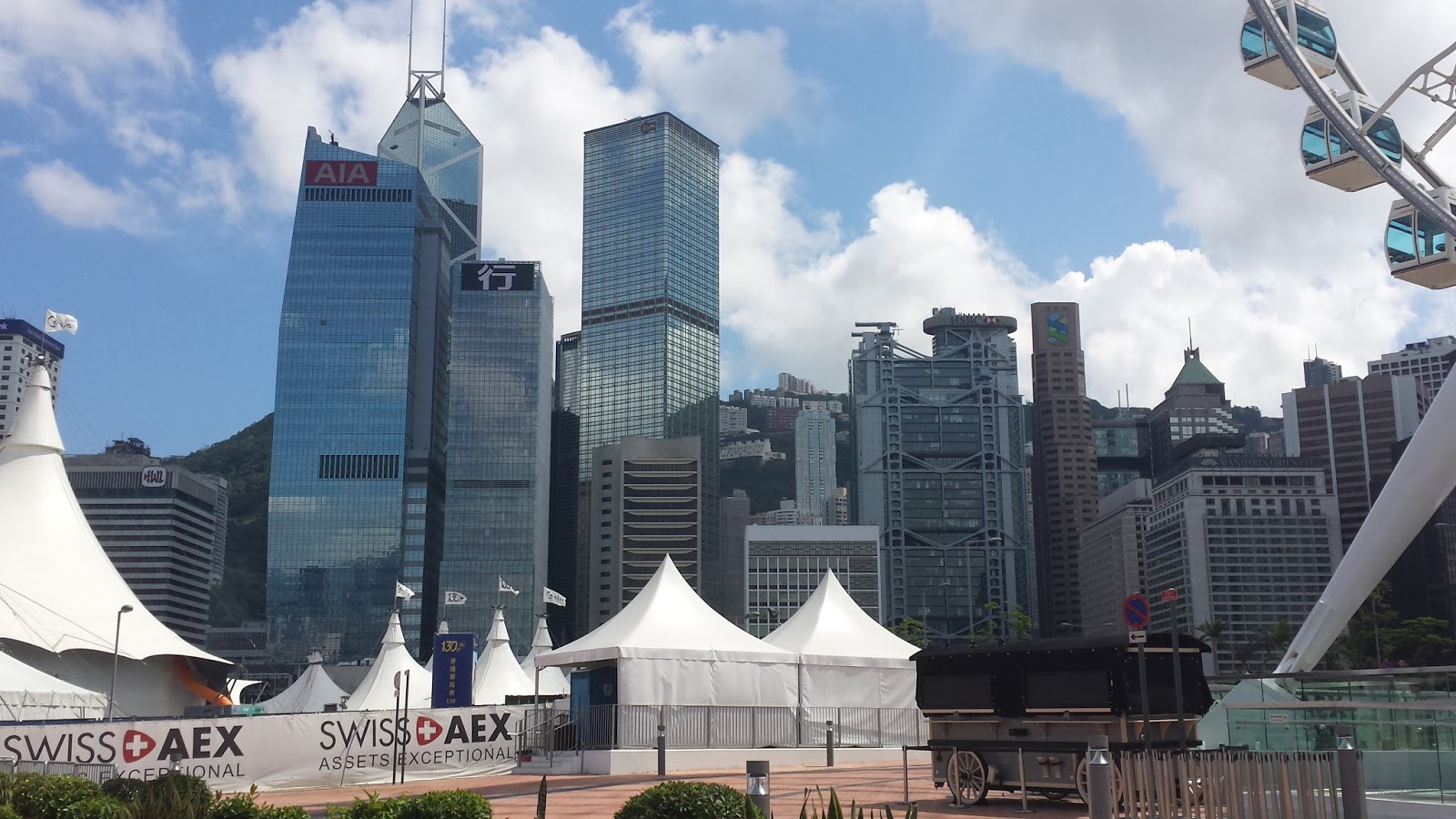
Hong Kong Observation Wheel
Central MTR Station Exit A to Central Piers

Admission: 100 HKD (credit card accepted)
Duration: 15 minutes (3 revolutions)


Sources: discoverhongkong.com

Thursday, June 11, 2015

2015 - Hong Kong (III)

DAY 04 - May 13, 2015 - Tai O (大澳)

Take Bus 11 at Tung Chung (東涌) MTR Station.


Tai O is one of the oldest fishing towns located on the West coast of Lantau Island. It is known for the traditional industries making shrimp paste and salted fish. After cleaning and gutting, the whole fish is inserted into salt vertically for one to two days and then sun-dried until ready. The process takes approximately one week to be complete.

Daily Life


(Old house)

(Lady sun-drying shrimp paste)

(Sun-dried salted egg yolks)

Rituals


The traditional water wedding:
Bride is dressed in auspicious red wearing golden ornaments. The groom rides on another small boat sending 36 boxes of wedding gifts to the bride's stilt house. He then taps on the bride's head with a paper fan. This gesture symbolizes the blissful messages of auspiciousness, obedience and reproduction. Lanterns are hung on over the sampans. Celebrating music is playing.

Snack Time!

1. Fish ball (魚蛋):

2. Tea egg (茶葉蛋):


3. Mountain Begonia Drink (紫貝天葵):
Villagers harvest and brew Mountain Begonia into a herbal tea. This beautiful purple red color local drink is a popular thirst quencher.


4. Tea cake (茶果):
Local snack.


5. Tai O Char-Grilled Egg Waffles (大澳炭燒雞蛋仔):
In the past, egg waffles were mostly made of duck eggs. These eggs are mainly used to produce salted egg yolks. Due to the high cost and limited quantity of duck eggs, chicken eggs have replaced them. Traditional char-grilled egg waffles are rare these days. Shops in city use gas or electric power. Char-grilled egg waffles taste so much better!!!


Stilt Houses (棚屋)

The stilt houses were built by the Tanka people (蜑家), a community of fishing folk These structures are interconnected creating a community living on the water.


Tai O Heritage Hotel (大澳文物酒店)


Constructed by the British government in 1902, the Old Tai O Police Station initially housed marine policemen guarding the western border between China and Hong Kong. It also overlooks the South China Sea.


The colonial style building was divided into 3 sections.The main building contains 2 floors with 5 rooms each level and century-old fireplaces. On the ground floor, there were a report room, 2 cells and an armory. On the first floor, there were quarters for expatriate inspectors and a turret projected from the roof. During the early days, the upper floor was used by European police officers only and Chinese inspectors were not allowed to be there. The Outhouse housed facilities such as the laundry and the kitchen. In order to improve the working environment, a one-story annex  was built in 1961-1962: the Later Extension Block. It included dormitories, a canteen and a guard tower on top.

In 1996, the marine police vacated the station and became a patrol post for land police. It lasted until 2002. The site was restored in 2009. It operates as a non-profit social organization since 2012. The Tai O Heritage Hotel project has been awarded an Award of Merit at UNESCO 2013 Asia-Pacific Awards for Cultural Heritage Conservation. The hotel has 9 rooms and 1 restaurant. In order to support the sustainable growth of the village, the project provides local employment and uses local ingredients. The food is yummy and not too expensive. Check out the afternoon tea set menu starting from 2:30 PM.

Pork chop bun with marinated shrimp paste + potato wedges:


Pita sandwich + potato wedges:


Dinner Time
School Food @Festival Walk (又一城), Kowloon Tong (九龍塘)
Korean cuisine, not too expensive.


(Rice cake + carbonara sauce)


(Octopus maki, yummy!)

Dessert Time
Chung Kee Dessert (松記糖水店)@Sham Shui Po (深水埗)


Sources: Tai O Heritage Hotel

Wednesday, June 10, 2015

2015 - Hong Kong (II)

DAY 03 - May 12, 2015 - Central & Tsim Sha Tsui

Today I woke up at 1 PM. I walked around in Central & in TST. I went to 2 of my favorite stores: Goods of Desire and Tom Lee Music.

In the evening, I met some friends and had dessert together at:


Temple Street Night Market (廟街)
Jordan MTR Exit A

Opening at 4 pm, this market consists of different shops selling clothing, accessories and souvenirs. Prices can be bargained.


Sunday, June 7, 2015

2015 - Hong Kong (I)

DAY 01 - May 10, 2015 - King Crab

Upon my arrival at the Hong Kong International Airport, I had to catch the bus to go home for the family dinner. A fresh king crab from Japan welcomed me on the table.


DAY 02 - May 11, 2015 - Stanley

STANLEY (赤柱)

Stanley is a fishing village located on the southeast side of Hong Kong Island. Take bus 973 from TST which goes through Pok Fu Lam, Aberdeen and Repulse Bay Beach or bus 6 or 6X from Central. The bus drops you at Stanley Plaza.

- Murray House:
Major Aldrich and Lieutenant Collinson of the Royal Engineers designed and constructed this Victoria-era building in 1844. It was named after Sir George Murray (1772-1846), a British soldier and politician. It was originally served as barracks for the British military and was part of the Victoria Barracks up until the 1960s. In 1982, Murray House was dismantled from its original location in Central where the Bank of China Tower sits now. This 3 stories colonial building was restored at Stanley in early 2000's. Today, it houses restaurants.


- Blake Pier:
Formerly Peddar Pier, this pier was rebuilt in 1900 and renamed after the Governor Sir Henry Arthur Blake. Initially, it was an open-air pier and a steel roof was only added in 1909. The roof and underpinnings of the original Blake Pier were reassembled in 2006.

- Stanley Market:
A small labyrinth of alleyways and streets full of little shops for tourists.

- Stanley Promenade & Waterfront Mart:
 The waterfront area has an attractive boardwalk with pubs, restaurants, cafés and souvenir shops.

MONGKOK (旺角)

Located in Kowloon, this neighborhood includes many of Hong Kong's most popular markets and shopping streets. Situated on Tung Choi Street, the Ladies' Market covers a 1 kilometer stretch with over 100 stalls of bargain clothing, accessories and souvenirs. There are street sections dedicated to the sale of goldfishes, sneakers, flowers and birds. Besides shopping, you can taste many street food snacks:

1. Hot-Star Large Fried Chicken (豪大大鸡排)
Oversized crispy chicken is a Taiwanese snack since 1992.


2. Pork big intestine (豬大腸):


3. Egg waffles (雞蛋仔):
It literally means "little eggs".


4. Coconut juice (椰汁):

5. Stinky Tofu (臭豆腐):
I finally tasted it! Yummy! Nowadays, it is hard to find stinky tofu due to its smell and fake producers.


KWUN TONG DISTRICT (觀塘)

Kwun Tong is an industrial neighborhood. I had dinner in an old factory turned into restaurant; a chicken hot pot:


Sources: hkmemory.org, discoverhongkong.com