Tuesday, June 23, 2015

2015 - Hong Kong (VI)

DAY 07 - May 16, 2015 - New Territories (新界)

Breakfast Time!

I had a boat congee (艇仔粥) [my favorite!], fried dough wrapped in a rice noodle roll (炸兩) and soy milk (豆漿) at an indoor open-air food stall (大牌檔) with air-conditioning located above the market.


Wishing Tree @Lam Tsuen (林村許願樹).


Located at Tai Po, Lam Tsuen (林村) was already a residential area during the Southern Song dynasty (1127-1279). At the entrance of each village, there is a tree. The tree is believed to protect the village. In the past, whenever there was a festival, villagers will throw joss paper into the tree and make a wish. Apparently, the higher the branch the joss paper landed on, the greater the probability the wish would come true. Today, the actual wishing tree is no more there due to additional heavy weight. There is a temporary imitation tree while the real tree is in recovery mode. People tie their joss paper on the wooden racks.


(Actual Wishing Tree)
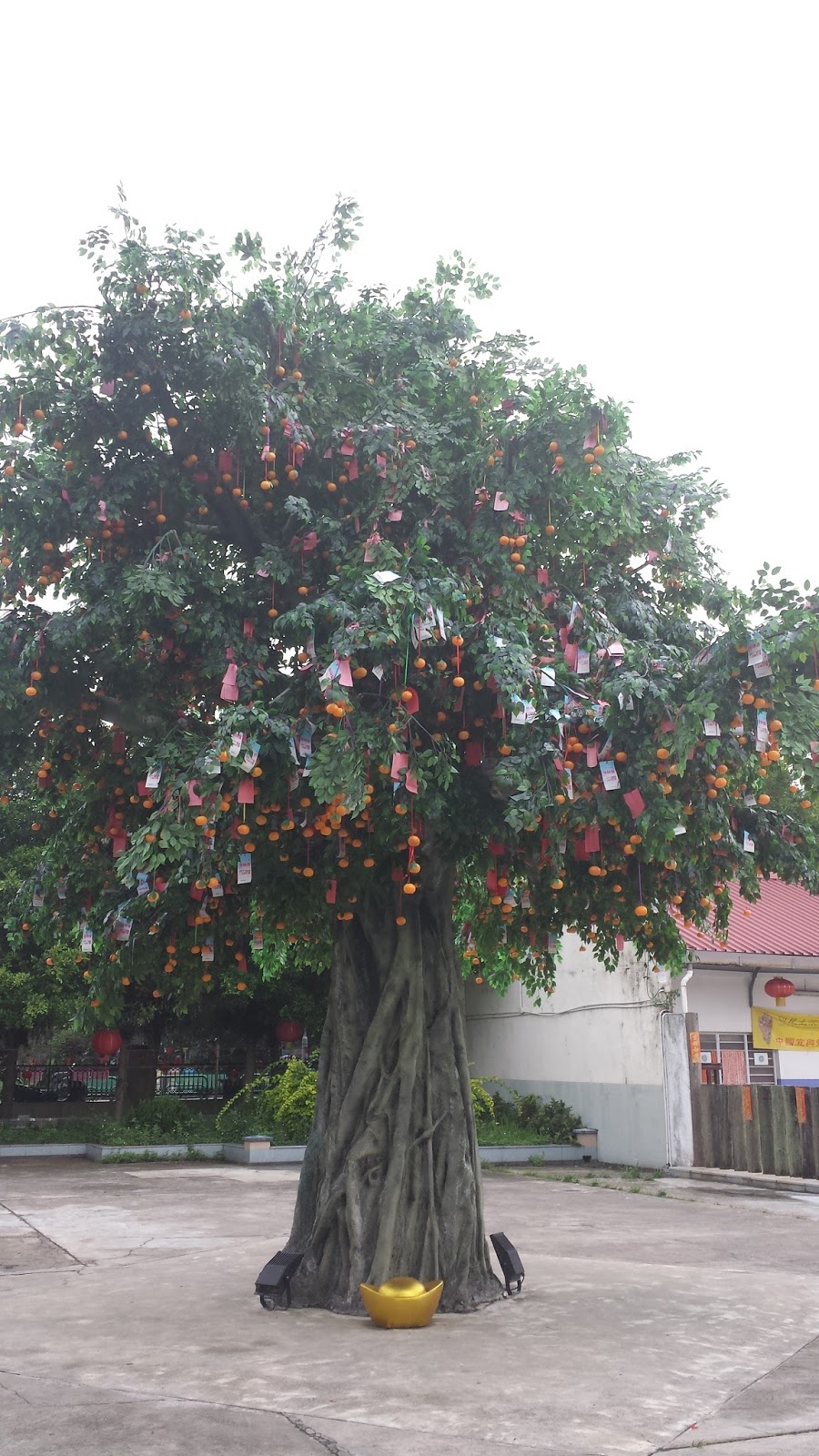
(Imitation Tree)

(Wooden Racks)

Snack Time!

- Tofu Pudding (豆腐花)
This snack is made of very soft tofu served with sweet ginger syrup.


- Nuomici (糯米糍)
Chinese pastry from Hong Kong in which the outer layer is made of glutinous rice dusted in dried coconut and the filling is sugar with coconut crumbled with peanuts, red bean paste and black sesame seed paste.


Hong Kong Railroad Museum @Tai Po Market


13 Shung Tak Street
Tai Po Market, Tai Po
Free admission.

Some 6,500 square meters were converted from the old Tai Po Railroad Station into this open-air museum.
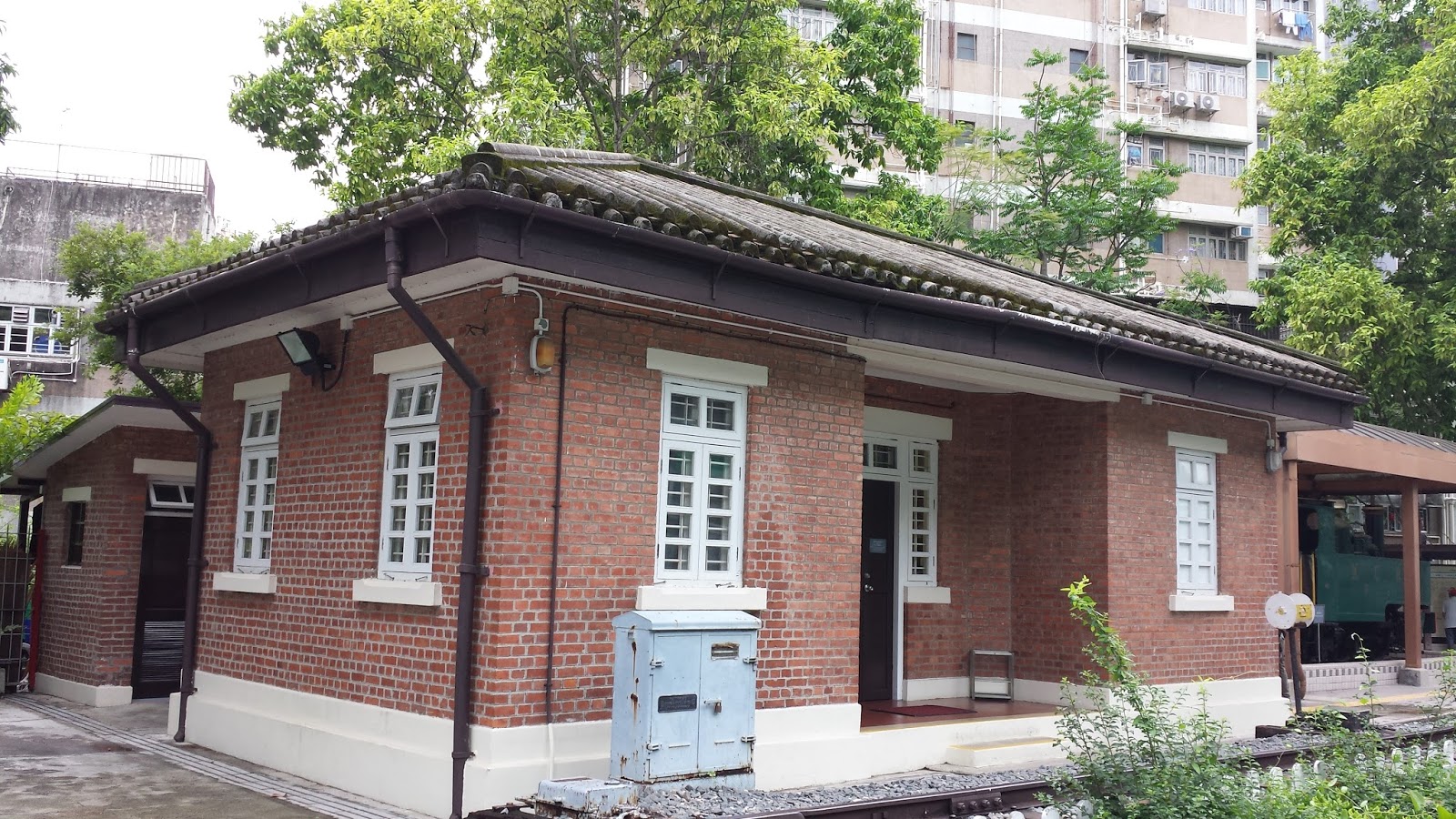

Ticket Booth


Tickets


Stops


Kowloon-Canton Railway Corporation


Diesel Electric Engine No. 51 - "Sir Alexander"
Locomotives No. 51 and No. 52 were made in Australia and imported to Hong Kong in 1955. They were the first diesel electric engines used on Hong Kong's rails and named after people. Locomotive No. 51 served passengers until 1983 when the KCR Corp. switched the passenger service to full electrification. It then hauled freight trains and maintenance coaches. In 1997, this diesel electric engine completely phased out of service.


Seats


Luggages Compartment


Between 2 wagons


Semaphore Signalling Levers
To control the semaphore arms, manually operated signalling levers were used. When the arms were lowered, the trains were allowed to go forward. When the arms were in a horizontal position, all trains had to stop.


Miscellaneous


Lunch Time!


(The background is Shenzhen)


Sai Kung (西貢) District


This evening my friend brought me to Sai Kung District. On a sunny day, local HK people will rent a boat to go squid fishing. To do next time!


Sai Kung Seafood Street


The name of the street says it all!

Loaf On (六福菜館)
49 Market Street (場街49號)

Michelin 1 Starred restaurant. Yummy seafood!


[Fish Soup (魚湯)]

[(豉椒炒蟶子)]

[Abalone (椒鹽鮑魚)]

[Crab (蟹)]

Honeymoon Dessert (滿記甜品)
G/F, 9-10ABC 10 Po Tung Road

I ate at the the head store.


(Durian!)

Sources: saikung.com

Sunday, June 14, 2015

2015 - Hong Kong (V)

DAY 06 - May 15, 2015 - Architecture

Nan Lian Garden (南蓮園池)

60 Fung Tak Road, Diamond Hill, Kowloon
Diamond Hill MTR Station Exit C2
Free admission

The Garden is built in modern times inspired by the classical style of Tang Dynasty (618 AD - 907 AD).


Lunch Time!

I returned to Toast Box@Plaza Hollywood. I tried my first bowl of Laksa. Hopefully, next time I can go to Singapore!


Villain Hitting / Da Siu Yan (打小人)

Located under the Canal Road Flyover (鵝頸橋), adjacent to Hennessy Road, between Causeway Bay & Wan Chai, there are old ladies hitting villains. Villain hitting is a folk sorcery. The custom is usually practiced during the period of Jingzhe (驚蟄): the day in which the hibernating insects are awakened which implies that the weather is getting warmer.


In the afternoon, I followed one of the self-guided walks suggested by Discover Hong Kong: "Garden Road Leisure Walk - A Century of Architecture".

Hong Kong Park (香港公園)

19 Cotton Tree Drive
Central, Hong Kong Island

Opened in May 1991, the park features a waterfall, pond and a wedding registry. It covers an area of 8 hectares. This site was originally a garrison named Victoria Barracks.


Flagstaff House Museum of Tea Ware

10 Cotton Tree Drive
Central (inside Hong Kong Park)
Free admission.

Built in 1846, the Flagstaff House is the oldest existing Western building in Hong Kong. It was formerly known as Headquarters House. Around 1932, the building became the office and residence of the commander of British forces until 1978. It was renamed Flagstaff House. In 1981, Dr. K.S. Lo, the founder of Vitasoy Group, contributed a collection including ceramic and purple clay tea vessels and related relics dating from the Western Zhou (11th c. B.C. - 771 B.C.) to the 20th century. In 1984, the Museum of Tea Ware opened to the public.

I visited the thematic exhibition: "From Soya Bean Milk to Pu'er Tea (從豆奶到普洱)".


St Joseph's Church

Built in 1871, this church survived the attacks of Second World War and different typhoons. The structure was demolished and rebuilt in mid 20th century.

(Blue building@right bottom = St Joseph's College)

The Helena May Building

35 Garden Road
Central, Hong Kong Island

Built in 1914, the building was officially opened in 1916 as a hostel for women. It has a colonial architecture. Lady Helena May, the wife of the Governor Sir Henry May, established this building to promote welfare of women and girls. During the Second World War, Japanese troops occupied this edifice. It was not reopened until 1947. Today, the Helena May Building is a Club for women. It offers dining facilities, accommodation, an English language library, social and cultural activities


St John's Cathedral

4-8 Garden Road
Central, Hong Kong Island

Completed in 1849, St John's Cathedral is the oldest existing Western-style ecclesiastical building in Hong Kong. The building was designed in the 13th century Early English and Decorated Gothic style.

I was lucky to listen to a young choir singing. The performers were finalists of a competition.


Sources: LCSD